Cold Radiators? 5 Fixes to Try Before You Call a Plumber
Cold at the top, cold at the bottom, or cold all over — what each pattern means and the simple fixes that solve most radiator problems in a Galway winter.
 David BadgerHeating engineer, Galway
A cold radiator in a Galway winter is miserable, but it’s often something you can check yourself in ten minutes. The pattern of the cold tells you a lot:
1. Cold at the top, warm at the bottom → trapped air
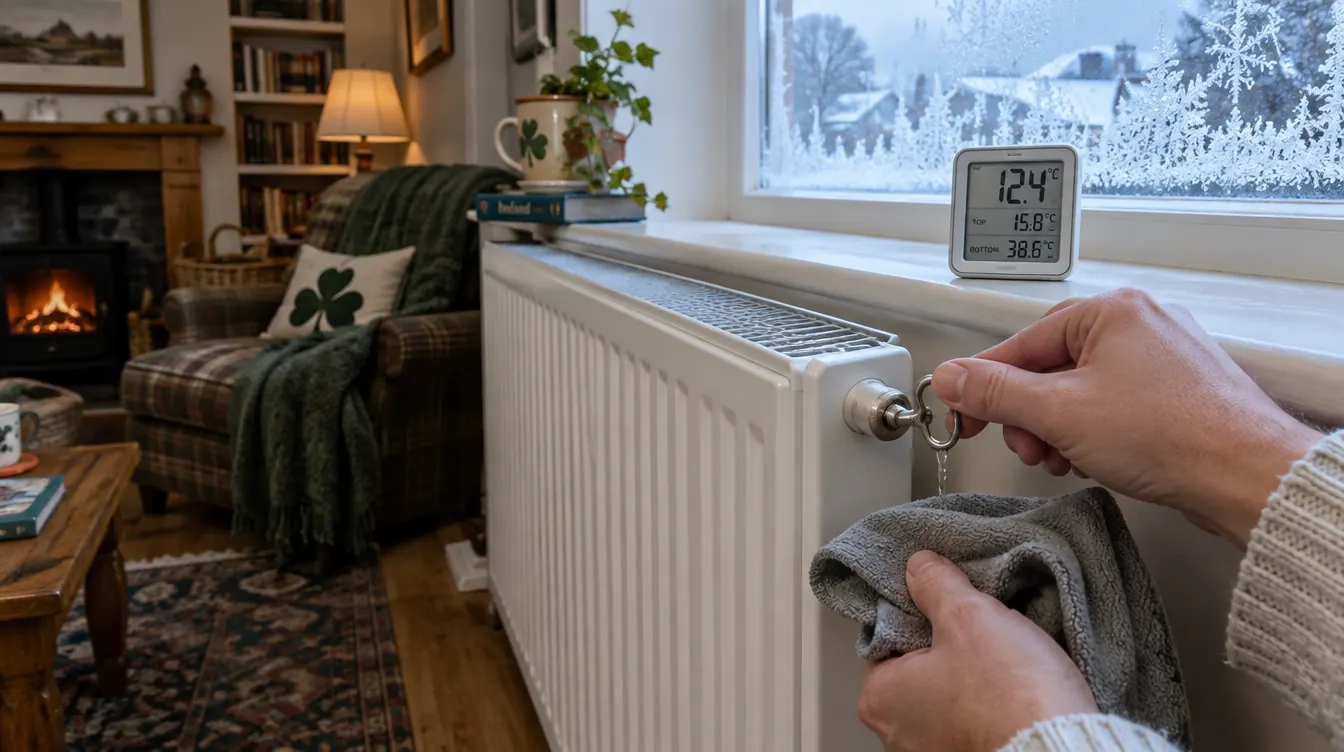
Turn the heating off, put a cloth under the valve and open the bleed screw with a radiator key a quarter turn. When air stops hissing and water appears, close it. Then check the boiler pressure — bleeding lowers it, and it should read 1 to 1.5 bar.
2. Cold at the bottom, warm at the top → sludge
Magnetite sludge settles in the bottom of radiators over the years. One radiator can sometimes be flushed on its own; if several are affected, the system needs a power flush and ideally a magnetic filter to keep it clean.
3. One radiator completely cold → valve
Check the thermostatic valve (TRV) is turned up. If it is and nothing happens, the pin inside may be stuck — take the head off and gently tap the pin. Still nothing? The valve may need replacing.
4. Radiators far from the boiler are cold → balancing
Heat takes the easiest route. Radiators near the boiler get hot and the far ones stay lukewarm. Balancing the system — adjusting the lockshield valves — spreads the heat evenly.
5. All radiators cold → boiler or pump
If nothing heats, check the boiler for a fault code and the pressure gauge, and listen for the pump. A pump that hums but doesn’t circulate is a common failure — and one of the jobs David’s customers mention most.
Quick rule: bleeding and TRV pins are DIY. Sludge, balancing, pumps and boiler faults are jobs for an engineer.
Tried the easy fixes and still cold? Call David on 086 199 5980 or send a short video on WhatsApp — he can often tell what’s wrong before he arrives.